
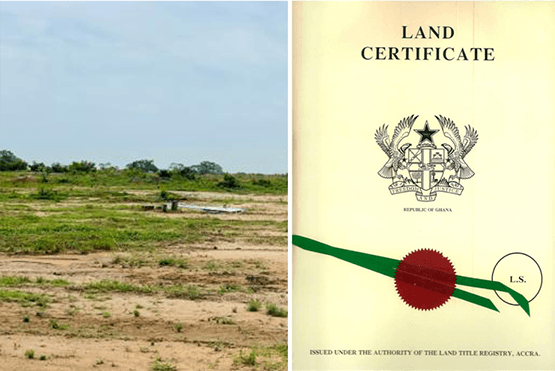
Registering land in Ghana has historically been a complex and often frustrating process, plagued by manual record-keeping, missing files, and the nightmare of overlapping claims.
For decades, many Ghanaians and investors lost significant sums of money due to “double sales” and protracted legal battles. However, the landscape has fundamentally shifted.
With the 2026 full-scale rollout of the Ghana Enterprise Land Information System (GELIS), the Lands Commission has transitioned into a fully digital era.
This guide provides a comprehensive, deep-dive into how to register your land under this new digital framework, ensuring your investment is legally protected under the Land Act, 2020 (Act 1036).
Understanding Act 1036 and GELIS
Before diving into the steps, it is crucial to understand the law governing land in Ghana today. The Land Act, 2020 (Act 1036) was passed to consolidate and reform the laws relating to land, to improve land administration and management. GELIS is the technological engine that brings this law to life.
GELIS is an integrated digital platform designed to provide a “single source of truth” for land titles, deeds, and spatial data. By 2026, the system has eliminated the need for physical movement of files between departments like the Public and Vested Land Management Division (PVLMD) and the Land Valuation Division (LVD). Everything is now synchronized in real-time.
Key Benefits of the 2026 Digital Update:
- Elimination of Double Registration: The system uses precise GPS coordinates. If someone tries to register land that overlaps with an existing title, the system automatically blocks the application.
- Real-Time Tracking: Just like tracking a courier package, applicants can log into the GELIS portal to see exactly which officer is working on their file.
- Enhanced Security: Digital certificates now come with encrypted QR codes that can be verified instantly by banks and other institutions.
How to Register Land in Ghana
1. Pre-Purchase Due Diligence (The Digital Search)
The most common mistake in Ghanaian land transactions is paying for land before verifying its status. In 2026, “due diligence” is faster but more critical than ever. Before starting, ensure you understand the legal risks and requirements of building in Ghana.
- Obtain the Digital Site Plan: Request a site plan from the seller. This plan must be prepared and signed by a Licensed Surveyor and must contain the precise GPS coordinates of the land.
- The GELIS Official Search: Log into the GELIS Public Portal. You will need to upload the coordinates or the scanned site plan. The search will provide a “Land Status Report” within 48 hours, revealing:
- Ownership: Who is the registered legal owner?
- Encumbrances: Is there a mortgage on the land? Is there a court injunction?
- Zoning: Is the land for residential, commercial, or agricultural use? Is it in a “Green Belt” or designated as State Land?
2: Identification of the Grantor (The Seller)
In Ghana, land ownership falls into four main categories: Stool/Skin Land, Family Land, State Land, and Private/Individual Land. You must ensure the person signing your documents has the “Right of Alienation.”
- Stool Land: Must be signed by the occupant of the Stool (the Chief) and concurred by the Lands Commission.
- Family Land: Must be signed by the Head of Family in concurrence with principal members.
- Ghana Card Verification: As of 2026, the GELIS system is linked to the National Identification Authority (NIA). The seller’s identity is verified using their Ghana Card to prevent impersonation fraud.
3: Drafting and Execution of the Indenture
Once you are satisfied with the search, your lawyer must draft the Indenture (Transfer Document). This legal contract must clearly state the terms of the lease (usually 99 years for Ghanaians and 50 years for non-Ghanaians), the purchase price (consideration), and the covenants (rules for using the land).
Crucial Requirement: The Indenture must now include the Ghana Post Digital Address of the property and the Digital Address of both the buyer and the seller. Without these, the GELIS system will reject the upload.
4. Digital Submission and Processing
With your signed and witnessed Indenture in hand, you (or your lawyer) will upload the document to the Lands Commission via the GELIS portal. During this stage:
- You will pay a Processing Fee via the integrated payment gateway (Mobile Money, Visa, or Bank Transfer).
- The system assigns a unique Application ID.
- The Survey and Mapping Division will digitally verify the site plan against the national grid.
5. Valuation and Stamp Duty Payment
This is a critical legal step. Every land document must be “stamped” to be admissible in court. The Land Valuation Division (LVD) uses the GELIS database to assess the current market value of your land. They do not necessarily use the price you paid, as some buyers under-declare prices to avoid taxes.
Once the assessment is done, you receive an SMS and email notification with a Tax Invoice for Stamp Duty. This is usually roughly 1% of the assessed value. Once paid, a digital stamp is applied to your electronic file.
6. Publication and The 21-Day Objection Period
To ensure transparency, the Lands Commission is required to notify the public. In the 2026 update, this involves:
- Posting the notice on the GELIS Digital Bulletin Board.
- Publishing in a national daily newspaper.
This provides a 21-day window for anyone who believes they own the land to file an “Objection” or “Caveat.” If no one objects within this period, the process moves to the final stage.
7. Issuance of the Land Title Certificate
After the objection period clears, the Land Registration Division finalizes the entry into the Land Register. You will be issued a Land Title Certificate. In 2026, you receive:
- Digital Certificate: A secure PDF with a blockchain-verified QR code.
- Physical Copy: A high-security printed document available for collection or courier delivery.
8. Post-Registration: Protecting Your Property
Registration is the legal shield, but physical protection is the practical shield. Even with a title, you should:
- Demarcate the Boundaries: Build a fence or pillars immediately.
- Regular Inspection: Visit the land at least once a month to ensure no “encroachers” have moved in.
- Pay Ground Rent: If your land is a leasehold (which most are), ensure you pay your annual ground rent to the Office of the Administrator of Stool Lands or the Lands Commission to avoid forfeiture.
Frequently Asked Questions
Q: How long does the entire process take?
A: Under the GELIS 2026 update, the target is 30 to 60 business days, provided there are no objections.
Q: Can I register land without a Ghana Card?
A: No. The Ghana Card is now the primary identification for all land transactions in Ghana.
Q: What happens if I lose my digital certificate?
A: You can log into your GELIS account and re-download it at any time, as your record is permanently stored on the cloud servers.
Conclusion
Land is one of the most valuable assets you can own. Ensure you treat the registration process with the seriousness it deserves. Always consult with a qualified legal practitioner to navigate the specific nuances of your transaction. For those renting while building, it is also helpful to know what the law says about advance rent.
Disclaimer:
Legal Disclaimer: The information provided on this website is for general informational purposes only and does not constitute legal advice. While we strive to keep the information accurate and up-to-date, laws and regulations in Ghana are subject to change. You should not act or rely on any information in this article without seeking the advice of a qualified legal professional licensed in Ghana. KnowYourRightsGH is not a law firm and is not responsible for any actions taken based on the content of this site.